Native Nations have an inherent right to govern their own lands and the resources derived thereof; but centuries of colonial extractivism has created numerous barriers that make it difficult for tribes to exercise this inherent sovereignty. Our newest storymap is an exploration into tribal energy sovereignty and its relationship to colonial extractivism. We also discuss energy inequity across Indian Country and the work being done by Native-led organizations to empower tribal energy sovereignty.
Energy Sovereignty in Indian Country
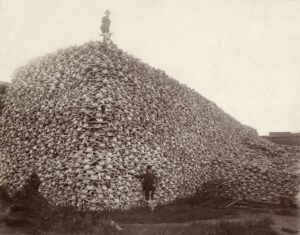
In this storymap we take a close look at how extractivism drove the U.S. colonial project and the impact that this had on the tribes of North America. By examining extractivism as it evolved and manifested over the centuries we can more clearly see how contemporary energy inequities came to be.
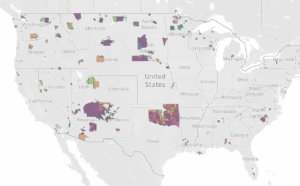
A key factor that hinders tribal energy accessibility is a lack of tribal-specific data quantifying the current state of energy services across Indian Country (U.S. Department of Energy, 2023, p. iii). We take the opportunity to look at some of NLAP’s energy data tools that are designed to help bridge this data gap for tribes.
Scroll through the data tools below to see what we cover in our storymap. Clicking on the different images will take you to the data tool on the Native Land Information System (NLIS)!
Learn More About Energy Sovereignty in Indian Country
Interested in learning more about these data & seeing demonstrations of how to navigate these tools? Check out our Energy Sovereignty in Indian Country storymap!
Author
Written by Mauryn Morfitt
Works Cited
United States Department of Energy. (2023, August). Tribal Electricity Access and Reliability. https://www.energy.gov/sites/default/files/2024-01/EXEC-2023-000952%20-%20Tribal%20Electricity%20Access%20Reliability%20Report%20to%20Congress%20%28Final%20Draft%20-%20Clean%29-signed%20by%20S1.pdf